
Executive Summary
Xeo is designed to serve as the authoritative system of record for service organizations. The platform governs service execution, project coordination, pricing, and billing while integrating with existing CRM and accounting systems. Its architecture emphasizes operational clarity, controlled automation, and explicit system boundaries.
We align Xeo to each client’s operations through configuration. Your Tailorformed™ system fits your unique business. Through ongoing stewardship, this combination of software and service allows firms to scale their operations while reliably preserving consistency and accountability.
The Challenge
As service firms grow, informal coordination begins to break down. Early on, shared understanding and direct communication are often enough. But as firms expand, they begin adopting specialized tools—CRM, project management, time tracking, accounting, messaging, spreadsheets, and other tools. Project management, pricing, and billing often live in different places, forcing firms to assemble invoices manually after the work is done. The result is not only friction, but also uncertainty. No single system sits at the center. People coordinate the tools rather than the system coordinating the work.
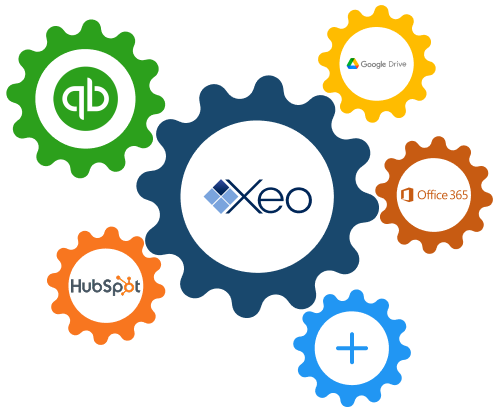
Xeo is designed to serve as that central system. CRM and accounting platforms remain, but Xeo governs the operational layer between them—coordinating service delivery, work execution, billing, and operational intelligence.
Core Design Principles
Xeo’s fundamental architectural principles are the constraints that protect operational clarity, system integrity, and long-term reliability. Their purpose is to ensure the platform remains a dependable operational backbone as a service firm grows over decades.
Supporting the Maturation Journey
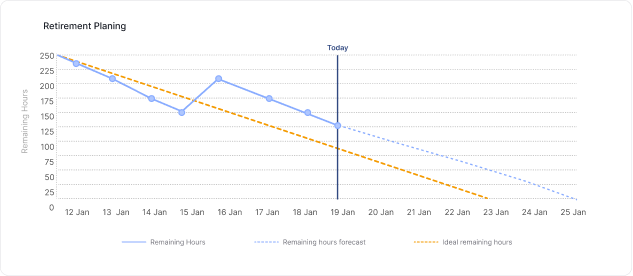
Consistent execution is always the goal, but ambiguity is sometimes unavoidable, especially with younger firms. Xeo is designed to support both early-stage teams and established organizations. The following examples illustrate how Xeo allows ambiguity while helping firms improve consistency.


A Single Evolving Platform
Xeo intentionally avoids the enterprise pattern in which customer deployments diverge over time as customizations accumulate. Instead, the platform is designed to remain a single evolving system across all clients.
This is made possible through a configuration model that aligns the system to each organization without modifying its core structure. Fields, interfaces, workflows, and integrations are defined through metadata and controlled extension layers rather than custom code. As a result, Xeo can Tailorform each deployment while preserving the integrity of the underlying platform.
Because behavior is driven through configuration rather than bespoke customization, improvements to the platform can be delivered without breaking tenant-specific implementations. Each client benefits from ongoing platform evolution while retaining a system that remains stable, consistent, and aligned to their operations.
This approach eliminates the tradeoff between fit and maintainability. Organizations do not need to choose between a system that matches how they work and one that can be safely upgraded over time. Xeo is designed to provide both.
Stable Core Data Model
Operational entities—such as services, projects, work items, and billing records—remain structurally consistent across all deployments, ensuring system integrity, upgradeability, and reliable reporting.
Metadata-Driven Field Model
The platform allows custom fields, validation rules, captions, and UI controls without altering the underlying schema.
Configurable User Interface
Pages, containers, and UI features are defined through configuration metadata, allowing layouts, labels, and field presentation to adapt without modifying application code.
Automation and Integration Level
Behavioral extensions and integrations are handled through the Xselera automation platform, enabling integration of third party systems without modifying Xeo itself.
Safe and Predictable Upgrades
Because behavior is driven through configuration rather than bespoke customization, platform improvements can be delivered to all customers without breaking tenant-specific configurations. Moreover, because Xeo is single tenant, each client determines the timing of their upgrades.
Professional Configuration Responsibility
Xeo rejects the common practice of allowing end users to configure complex operational systems. Designing such systems requires architectural thinking. For this reason, Xeo is designed to be configured by experienced IT professionals in collaboration with organizational leadership. Clients may engage their own qualified professionals if desired.
End users bring operational challenges and requirements, not technical solutions. This division of responsibility ensures the resulting system remains coherent, maintainable, and reliable over decades as the organization evolves.
Architectural Modules
Xeo is organized into domain modules, each responsible for a well-defined set of entities, data, and behaviors. These modules clarify data ownership and help ensure that changes in one area of the system do not destabilize other functions.
- Core Platform — shared system capabilities
- Configuration — settings and metadata
- Integration — interface to Xselera, the deeply integrated automation platform
- Account and People — organizational entities
- Authorization — permission and access control
- Service — service offerings and engagements
- Work Execution — tasks and time tracking
- Billing — quote and invoice composition
- Communication — contextual messaging
Architectural Overview: Three Planes of Responsibility
Xeo’s architecture is organized into three distinct planes to ensure that operational integrity is preserved while allowing each layer to evolve independently.
Each plane serves a distinct responsibility, allowing the system to evolve while preserving the integrity of the operational core.
Single-Tenant Architecture: Design Rationale
Xeo is deployed using a single-tenant architecture in which each organization operates within its own environment and database. This model ensures that an organization’s operational data, configuration, and system behavior remain fully isolated.
Many SaaS platforms adopt multi-tenant architectures to maximize operational efficiency and reduce infrastructure cost. While efficient, this approach can limit control over system behavior, configuration depth, and upgrade timing.
Xeo takes a different approach. By isolating each deployment, the system is aligned closely to each client’s operations. This architecture also supports controlled upgrade scheduling and the creation of sandbox environments that mirror production behavior, allowing firms to test operational changes safely before introducing them into live operations.
Xselera operates as a multi-tenant automation platform, enabling automations and integrations to scale efficiently while preserving the isolation of each client’s Xeo environment.
Tailorformed Design and System Integrity
Tailorformed — the professional service through which Xeo configures Xeo to reflect the operational model of each client organization.
Xeo architects work directly with organizational leadership to define requirements. The same team that created the platform also configures each deployment. The resulting system reflects the firm’s operational model while remaining aligned with Xeo’s architecture.
This relationship extends beyond initial deployment. Xeo acts as a steward of the client’s system, guiding its evolution as the organization grows and its operations mature. Insights gained from deployments inform Xeo’s evolution. Each Tailorformed system benefits from ongoing architectural stewardship rather than drifting into isolated customizations.
Governed Automation
Xselera responds to events from Xeo and external systems, invoking Xeo’s governed methods to perform authorized actions. Automations execute within Xeo’s authorization framework and cannot bypass system rules or permissions.
Permissions and Auditability
Managers indicate who is assigned to each account and project. Combined with role-based permissions, this structure allows them to control both what users can see and what they are allowed to do.
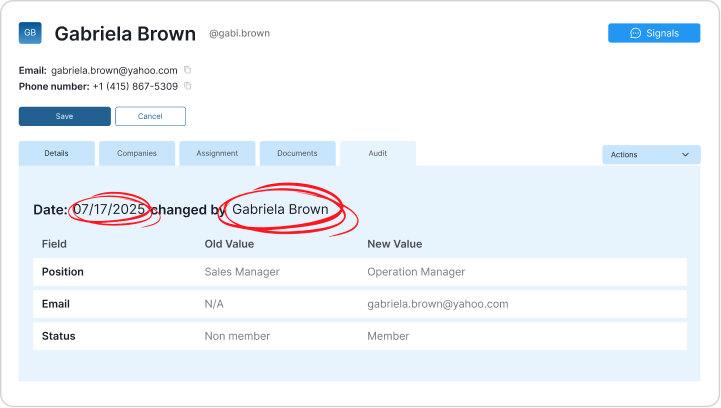
Audit history is available in context, alongside the operational data it relates to. Managers can see who made each change and when, directly within the interface.
This approach makes accountability part of everyday operations. Changes are visible, traceable, and understood in context, without requiring separate tools or investigation
Carefully Defined Scope
Xeo is intentionally focused on service operations. It does not attempt to replace CRM, accounting, or other specialized systems that already perform well within their domains.
When systems expand beyond clearly defined boundaries, responsibilities begin to overlap. Accounting and customer management become intertwined, leading to duplicated data, conflicting sources of truth, and increased system complexity.
Xeo is designed to avoid this pattern. It governs the operational layer—service definition, work execution, and billing intent—while integrating with external systems that remain authoritative within their respective domains.
This separation preserves clarity. Each system maintains a well-defined responsibility, reducing duplication and minimizing conflict.
Explicit Tradeoffs
Xeo intentionally limits certain forms of customization in order to preserve long-term system integrity. Organizations cannot arbitrarily modify the platform’s core schema, embed custom scripting engines, or create ungoverned workflow logic.
These constraints support long-term reliability as the business and platform evolve. Without them, systems often accumulate fragile configurations that become difficult to maintain or upgrade over time.
Who Xeo Is Built For
Xeo is designed for service organizations that value operational clarity and disciplined execution. These firms benefit from a governed system of record that coordinates service delivery, pricing, and billing while integrating with existing CRM and accounting systems.
The platform is particularly well-suited for organizations that prefer architected operational systems rather than open-ended productivity tools.
Xeo is not designed for teams seeking unrestricted customization, ad-hoc workflow builders, or highly flexible scripting environments. It is intentionally structured and will be constraining for organizations that prioritize flexibility over discipline.
Summary: Architecture as Stewardship
Service organizations depend on operational systems they can trust. As firms grow, informal coordination and loosely connected tools become increasingly difficult to manage. Reliable execution requires systems that preserve clarity, enforce governance, and evolve alongside the organization.
Xeo is designed to serve as the operational backbone of a service firm. Through disciplined architecture, Tailorformed delivery, and ongoing stewardship, the platform aligns closely with how each organization works while maintaining the integrity required for long-term reliability.
By combining a governed operational system of record with structured extensibility and controlled automation, Xeo allows organizations to scale their operations while preserving the clarity, accountability, and operational trust that growing firms require.
